The Real Problem Is Not Marketing. It’s Order.
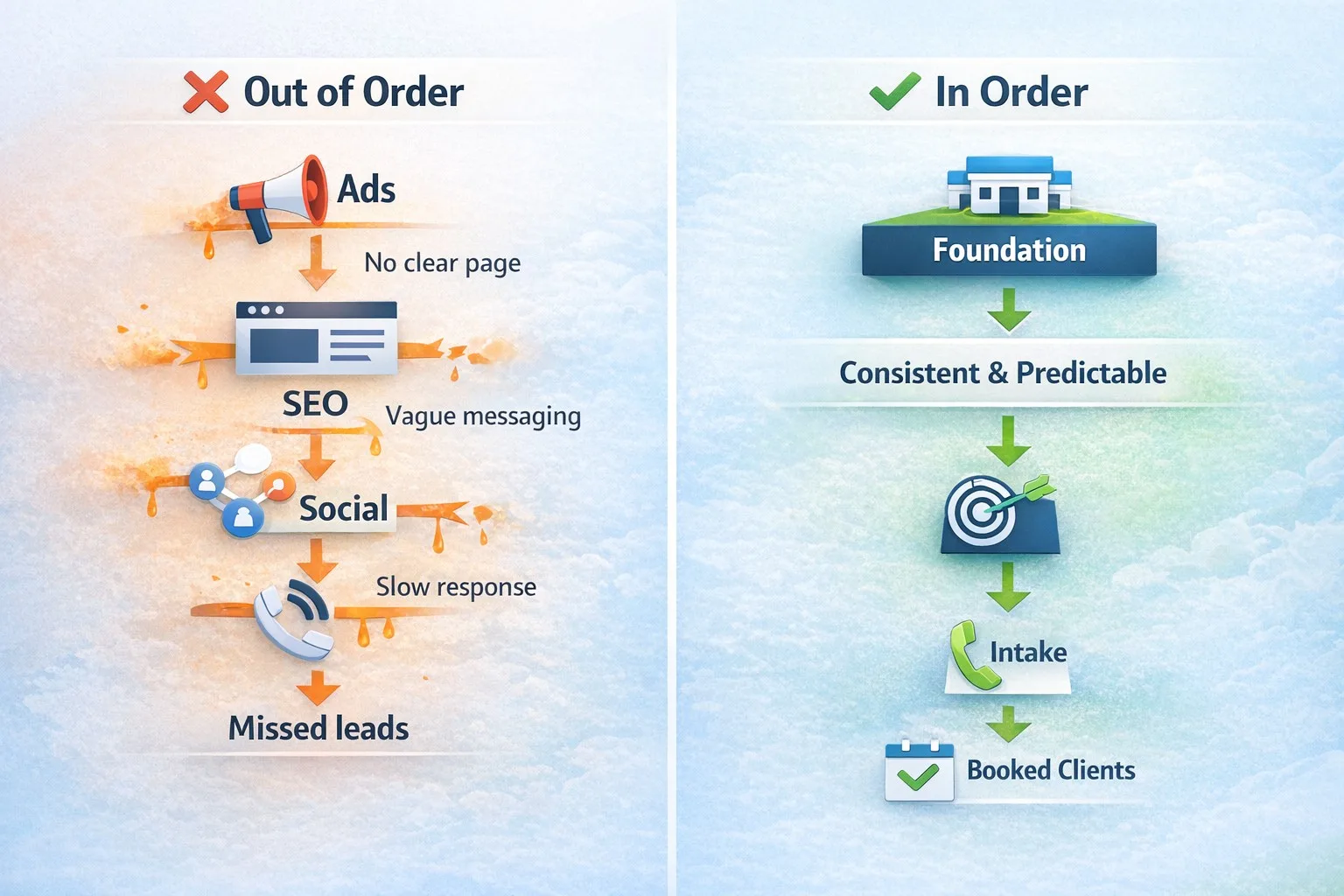
Most therapists are not under-investing in marketing.
They are doing it out of order.
- They run Google Ads to a vague homepage.
- They pay for SEO without clear services or locations.
- They post on social media with no clear next step.
- They spend money while intake is slow or inconsistent.
Marketing is not a list of tactics.
It is a sequence.
Ads amplify whatever is already true.
SEO amplifies whatever is already true.
If your foundation is fuzzy, you just scale fuzziness.
So here is the roadmap.
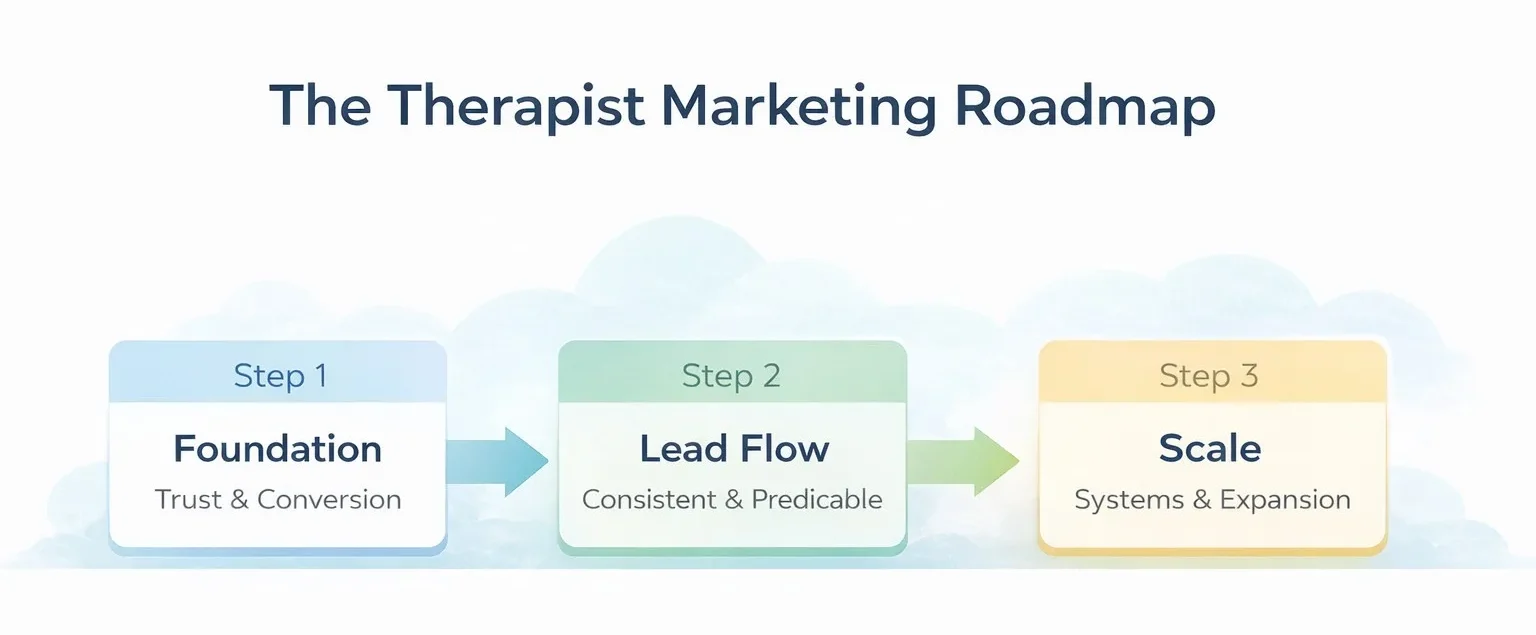
Step 1: Foundation
Make Your Practice Easy to Trust and Easy to Book
The goal of this stage is simple:
Turn attention into inquiries.
Before you spend a dollar on ads or long-term SEO, you need three things in place.
1. Clarify What You Want to Be Known For
Not “we help everyone.”
Pick 1 to 3 priorities.
- 1 to 2 core issues or populations
- A clear location or state
- Optional: one modality you want associated with your brand
Ask yourself:
– Who gets the best outcomes here?
– Who are your ideal clients?
– Who tends to stay longer?
– What do we want more of?
Clarity makes marketing cheaper.
Vagueness makes it expensive.
2. Fix Your Website So It Can Convert
Traffic is rarely the first problem.
Leakage is.
Your website should have:
- Clear service pages, not one generic “services” page
- Language that says who this is for
- Photos and real human presence
- A simple explanation of what to expect
- One clear next step
And here is an important distinction:
Your homepage is not a landing page.
If someone clicks an ad for couples therapy, they should land on a couples therapy page.
Relevance increases conversion.
Confusion lowers it.
3. Tighten Your Intake So You Do Not Waste Leads
This is where most practices lose money.
Before you scale, answer this honestly:
Can we respond the same day? (or at the very worst, next business day)
For group practices:
- Do we have a simple matching process?
- Do all inquiries flow into one system?
- Are we tracking how people found us?
Missed calls are the silent killer of ROI.
Once these three areas are solid, money spent on marketing starts working like leverage instead of stress.
Now you are ready for lead flow.
Step 2: Predictable Lead Flow
Choose One Primary Channel and Run It Consistently
You do not need every channel.
You need one channel that matches your stage.
Option A: If You Need Clients Soon
Start With Google Ads
This makes sense when:
- You need to fill openings in the next 30 to 60 days
- You brought on a new clinician
- You opened a new location
- You hit a seasonal dip
Starting right looks like this:
- Search campaigns, not boosted posts
- Service + location keywords
- Ads pointing to the matching service page
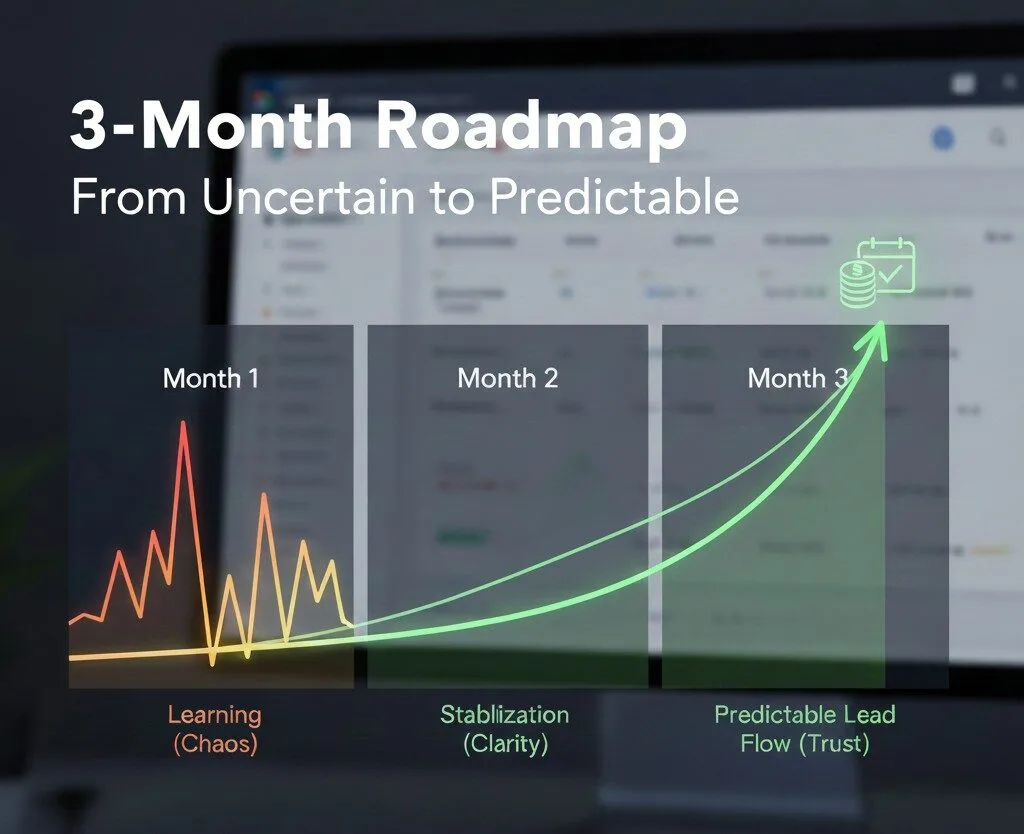
- A 90 day learning window
Month 1: Learning
Month 2: Stabilizing
Month 3: Predictable flow
Ads are not magic.
They are a controlled test.
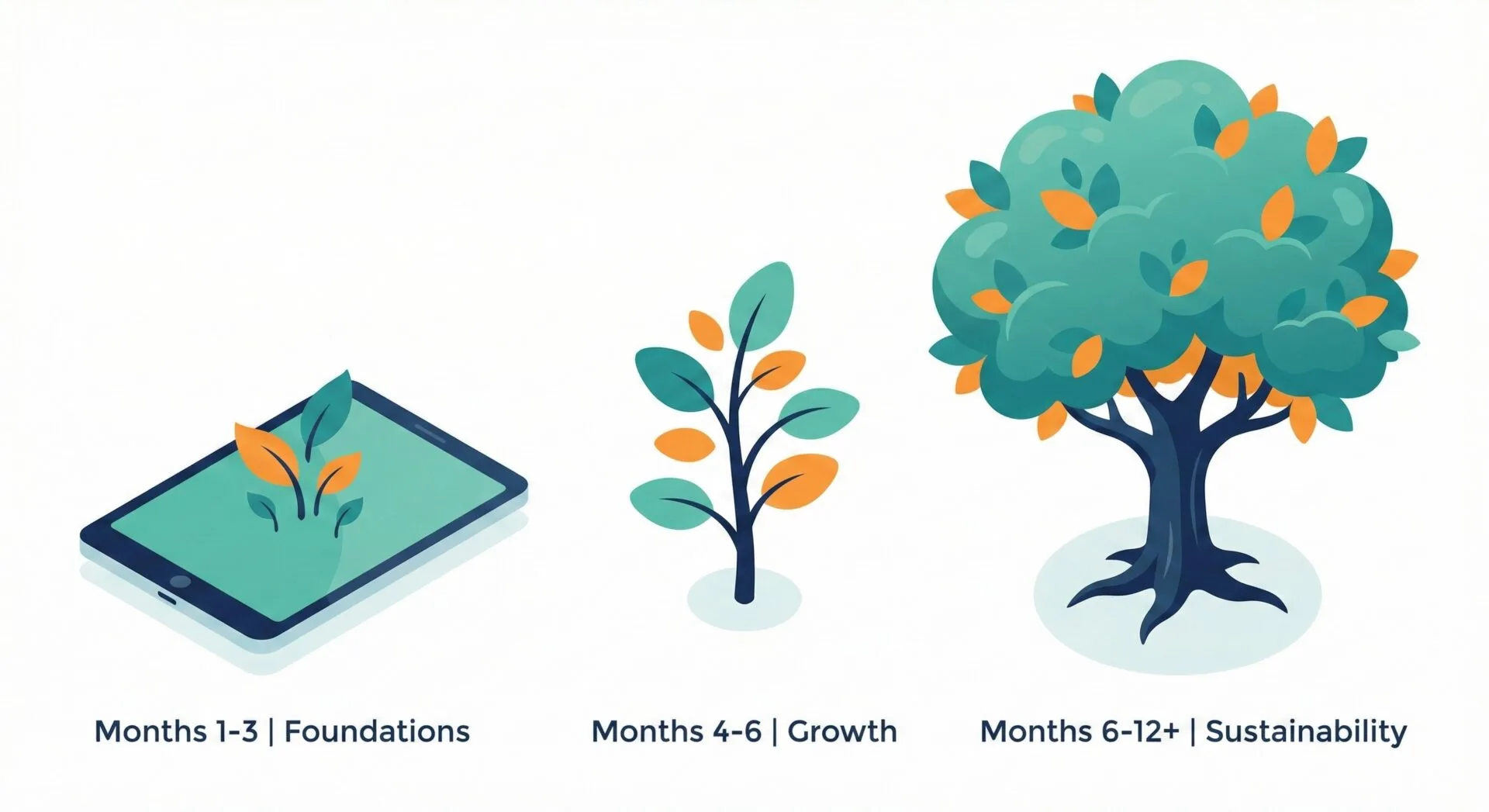
Option B: If You Want Long-Term Compounding
Start With SEO, GEO, and Maps
This makes sense when:
- You can commit 6 to 12 months
- You want less dependence on ads
- Your services and locations are stable
Starting right looks like:
- Clear priority service pages
- Optimized Google Business Profile
- Consistent local signals
- Ethical review growth
- Off-page authority building
SEO is a flywheel, not a switch.
It builds slowly and compounds.
Option C: If You Are Brand New or Budget Constrained
Strengthen Foundation and Use Directories
Directories can help early.
But they are rented visibility.
You do not own that channel.
They are a bridge, not a strategy.
Once one channel is stable, you move to scale.
Step 3: Scale
Add the Second Channel and Build a Real Growth Engine
Scale is not just more visibility.
Scale equals:
Visibility
Conversion
Systems
For most established practices, the strongest combination is:
Google Ads for speed
SEO and Maps for compounding
Ads bring immediate data and inquiries.
SEO lowers long-term dependence on paid traffic.
Together, they create stability.
But scaling also requires systems.
For Solo Practices
- Clear scheduling flow
- Follow-up process for undecided leads
- Light tracking of inquiries and bookings
You do not need complexity.
You need consistency.
For Group Practices
- Intake coordinator training
- Speed-to-lead expectations
- Clear matching rules
- Tracking which services are filling and which are not
Group practices do not just need more leads.
They need a system to distribute them.
Solo vs Group: The Order Changes Slightly
Solo roadmap:
- Foundation
- One “channel” (like psychology today)
- Second channel
- Light systems
Group roadmap:
- Foundation
- Intake discipline
- Ads to fill gaps
- SEO to stabilize
- Scale with tracking and refinement
Your business model changes the sequence.
The “Don’t Waste Money” Checklist
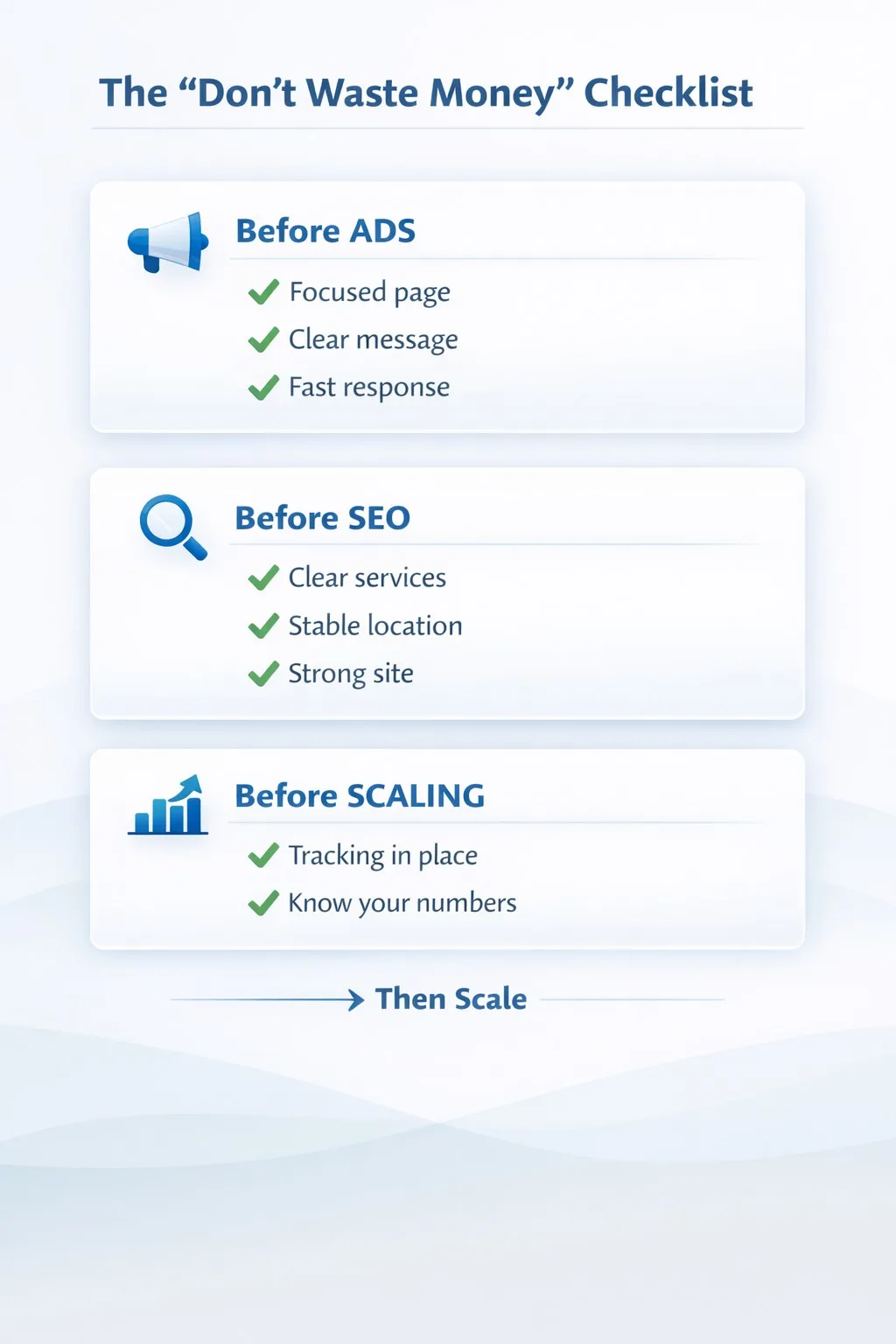
Before Ads:
- Do we have a focused page for what we are advertising?
- Can someone tell in five seconds who we help?
- Can we respond within one business day?
Before SEO:
- Do we know our priority services and locations?
- Are we staying in this market long term?
- Is our website strong enough to build on?
Before Spending More:
- Are we tracking inquiries and booked clients?
- Do we know our rough lifetime value and acquisition cost?
If you cannot answer these clearly, the next step is not more traffic.
It is tightening the system.
The Calm Money Math
Let’s simplify this.
If your average client attends 12 sessions at $150, that is $1,800.
How many new clients per month would comfortably cover your marketing investment?
When you look at it this way, marketing is not a gamble.
It is buying predictable client flow.
The order just determines whether that investment compounds or leaks.
The Bottom Line
If you feel like you have been bouncing between tactics, you are not failing.
You were missing a sequence.
Marketing works best when:
Foundation is clear.
One channel runs consistently.
Systems support growth.
Scale happens intentionally.
If you want help figuring out:
Which step you are on
What your highest leverage next move is
What you should ignore for now
Book a free strategy session.
No pressure.
Just clarity on your next move.

Nick Man is the founder of Counseling & Therapy SEO, where he helps therapists and counselors get found on Google without compromising their values (or burning out on social media). With a background in SEO and marketing, Nick builds calm, conversion-friendly websites and SEO strategies that actually feel human.
You can find Nick on LinkedIn  .
.